Brush Gently, Then Check with a Comb

Lesson 3 of 12 · Grooming for pet parents
A coat can look fluffy on top while small tangles remain underneath. This lesson teaches a repeatable preparation habit for suitable growing coats: work in small sections, then use a comb to check the section you have just brushed.
Start with a section you can see
Choose an easy shoulder or side area while your dog stands or rests comfortably on a nonslip surface. Gently part a narrow section so you can see where the hair begins. Work with the direction and texture of the coat, using a brush appropriate to it. Keep pressure light and avoid repeatedly scraping one patch of skin.
Support the coat gently where necessary so that a small movement at the ends does not pull at the roots. Do not grip tightly or use the other hand to hold the dog still against their wishes. If the section is too dense to see what you are doing, make it smaller.
Use the comb as a check
- Brush the small section with short, controlled movements suited to that coat.
- Try the coarse side of a suitable comb from near the roots outward, without pressing the teeth into skin.
- If it catches, stop where it catches. Do not pull the comb through to complete the stroke.
- Inspect the obstruction and decide whether it is a small, loose snag you can gently separate or something that needs professional help.
- Recheck that section. Use finer spacing only if it passes comfortably; fine teeth are not a way to force a difficult coat smooth.
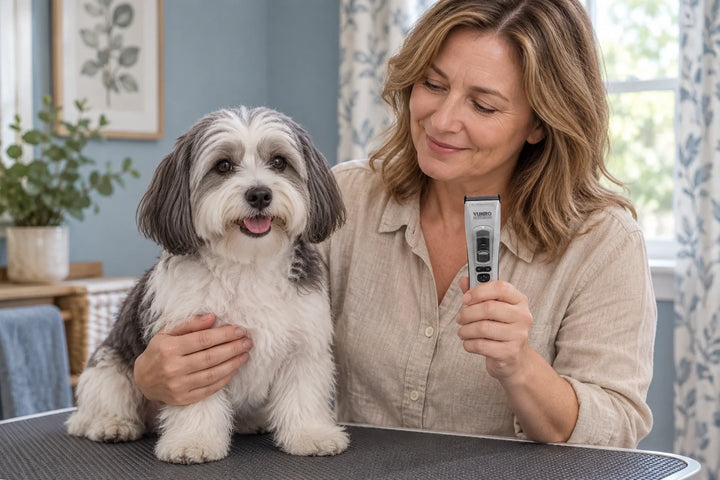
A VUNRO coarse-and-fine comb provides two spacings for suitable coat checks. A smaller straight comb may be easier to control in a small, clearly visible area. Neither tool makes a tight mat safe to work through.
Know the difference between a snag and a mat
A small loose snag away from skin may separate with your fingers and a dog-coat detangling product used according to its label. Stop if the skin moves with the knot, the dog reacts, or you cannot see the boundary between hair and skin. Detangling spray is an aid for an appropriate task, not permission to keep pulling.
Dense, tight, painful or extensive matting needs a groomer's assessment before a bath or haircut. Never slide scissors under a mat or attempt to rescue it by changing to a shorter blade. Our guide to matting explains why the condition of the coat changes the plan.
Check the places the brush tends to miss
On a growing coat, inspect friction areas such as behind the ears, under a harness and around the legs, while keeping handling comfortable. A quick brush over the back says little about those areas. Do not twist a limb or dig into an armpit to finish the checklist; difficult access is a reason to ask for a demonstration.
Work around the dog in small, remembered sections. You can note completed areas on paper rather than brush the same easy patch repeatedly. The aim is a coat you can check gently, not the biggest possible pile of removed hair. Natural double coats and specialist coats need their own brush and maintenance plan.
Your practice checkpoint
Choose one small patch and compare how it looks with how the comb passes through it. Record where it catches and what you did next. A good session can end after that single patch. Before a planned haircut, all intended cutting areas need the appropriate preparation, not just the patch you practised today.
For the complete preparation sequence, continue through bathing and drying, then use our coat-preparation guide as a final checklist.
Evidence and further reading
Keep learning
More from the Blade Blog
Start Grooming at Home: Your Dog Comes First
Read the guide →
Meet Your VUNRO Tools: Choose the Right Grooming Setup
Read the guide →