Shih-Poo Grooming: Gentle Face Care and Manageable Trims
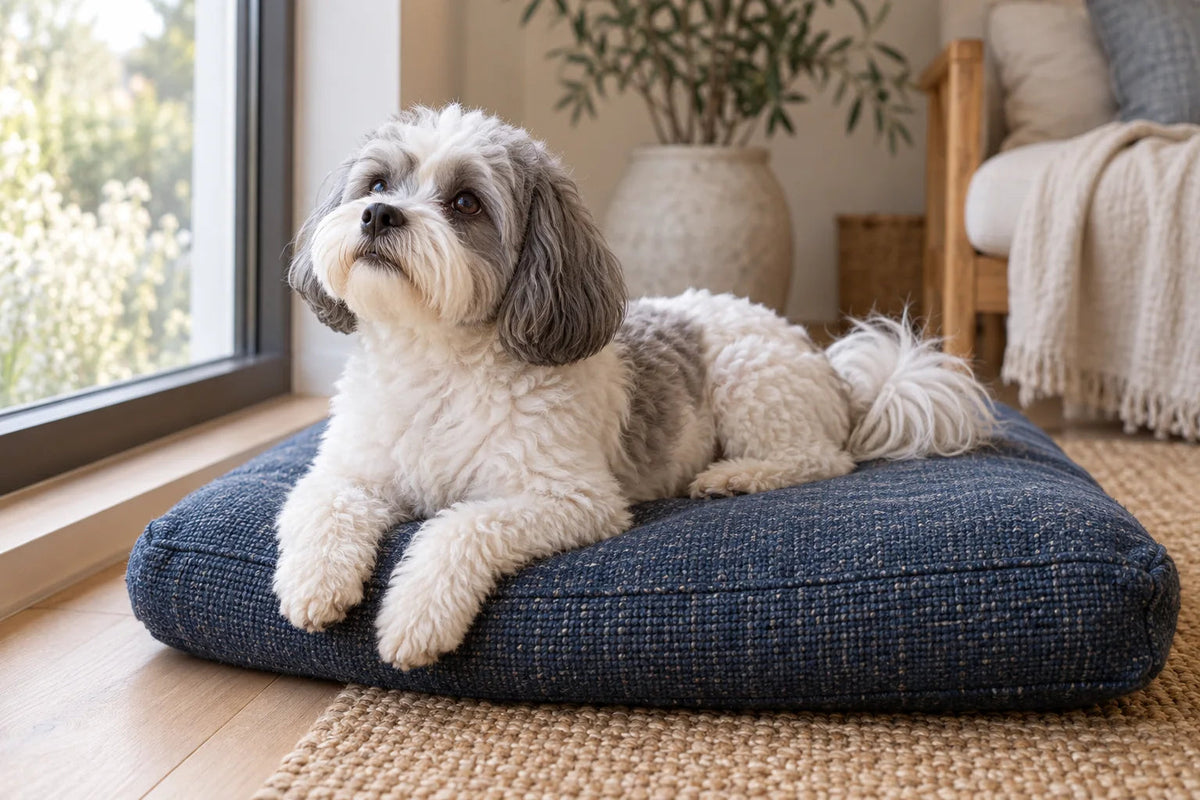
A Shih-Poo's soft face can distract from the less visible grooming jobs: fine hair beneath the harness, tangles behind the ears and little knots inside the legs. Keeping the dog comfortable means checking those areas as carefully as the pretty outline.
Shih-Poos are Shih Tzu–Poodle crosses. They can inherit different coat textures and face shapes, so the best pet trim is tailored to the individual rather than a fixed crossbreed style.
Keep grooming gentle and the face clear. A manageable trim, a secure surface and small coat checks are more useful than trying to preserve every centimetre of hair.
Look at the coat you have now
The grooming section of PetMD's Shih-Poo guide describes straight and curly hair, daily brushing and regular professional grooming. It also notes that a shorter haircut can make home maintenance easier.
Length and density matter as well as curl. A dog may have loose hair on the body but denser hair around the ears or legs. Ask your groomer to show you how to part and check these sections, and review the routine if the coat becomes harder to manage as it grows.
Low shedding should never be interpreted as no grooming, and no dog is guaranteed to be allergy-free. The practical objective here is a comfortable coat, not a promise about allergies.
Make handling comfortable before adding tools
Use a stable non-slip surface and keep the small dog safely supported. Do not balance them on a high edge or stretch their legs into awkward positions to reach underneath.
Start with gentle touch on an area the dog tolerates, then introduce a few light brush strokes. Keep sessions short and reward cooperation. Do not clamp the muzzle shut or hold the face tightly to finish a difficult section.
A dog that becomes increasingly uncomfortable with grooming may need a different technique, shorter sessions or professional help. More restraint is not the answer to a painful tangle.
Use small sections and a finishing comb
- Part longer hair so you can see where it grows from the skin.
- Brush the exposed section gently with a suitable tool.
- Check with the wider side of a metal comb.
- Use finer teeth only where they pass freely.
- Pause at resistance to identify the cause instead of tugging.
The VUNRO coarse-and-fine comb helps with these smaller checks. A comb that catches is giving you useful information; it is not asking you to pull harder.
Check behind the ears, beneath a harness, in the armpits and inside the back legs. Work through only loose, manageable tangles. Tight mats need professional assessment, and scissors should never be pushed underneath them.
Keep face care separate from a body haircut
Ask for a face trim that keeps hair out of the eyes and leaves the mouth easy to clean. The shorter muzzle on some Shih-Poos makes careful handling especially important, but not every dog has the same face shape.
Use a soft damp cloth for ordinary food residue, then dry the hair. Around the eyes, work gently away from the eye without scrubbing. Avoid stain-removing home mixtures or trying to cut close to the eye to remove discoloured hair.
If there is pain, unusual discharge or a sudden change, seek professional advice. A grooming guide should not turn an uncomfortable eye or skin problem into a cosmetic treatment project.
Choose lengths by area
“Teddy-bear trim” or “puppy cut” can mean different things to different people. Discuss the body, legs, ears, tail and face separately, ideally with an example of the finished length you want.
Tell the groomer which areas knot first and how often you can realistically comb them. A more practical body or leg length can preserve a soft face while reducing the difficult work between visits.
If significant matting is present, comfort determines what can safely be retained. Do not request long, painful detangling simply to preserve a particular style.
Prepare the coat before a clipped trim
Assess tangles before an ordinary bath and seek help with substantial matting first. Use dog shampoo according to its directions, protect the eyes and ears, rinse carefully and blot the coat with a towel.
Dry with comfortable moving airflow if tolerated, keeping the face clear and checking the roots. Before clipping, the hair should be clean, fully dry and combable. Our coat preparation guide explains why missing this stage can make a blade catch.
For owners who have learned safe handling and are maintaining an agreed body trim, the VUNRO D-Series clipper uses D-Series blades. Choose the finished length with guidance. Detailed cutting around eye corners, lips, ear edges and skin folds belongs with experienced hands.
Keep little feet visible
Inspect nails and any dewclaws regularly rather than relying on a fluffy foot's appearance. Ask a groomer to demonstrate safe handling and the amount to remove if you are unsure.
The VUNRO small nail clipper may suit small nails with appropriate technique. Stop before the quick and take breaks as needed. A smaller tool does not remove the need for a clear view.
Review the routine whenever the coat becomes harder to check. The best Shih-Poo grooming plan is one that keeps hair comfortable, vision clear and each session calm enough to repeat.
Keep learning
More from the Blade Blog

Whippet Grooming: Gentle Coat Care and Comfortable Nails
Read the guide →
Chihuahua Grooming: Smooth Coats, Long Coats and Tiny Paws
Read the guide →