Build a Grooming Routine You Can Repeat
Lesson 12 of 12 · Grooming for pet parents
A repeatable grooming routine is easier to improve than a rushed attempt to do everything. Bring the course together by choosing today's task, checking that its prerequisites are ready and keeping a short record of what worked for your dog.
Build a sequence you can pause
Start with coat and comfort checks. Prepare an appropriate coat through gentle brushing and comb checks, bathing when needed and thorough drying. Choose the agreed length and compatible device setup only when the intended cutting areas are ready. The D-Series and PRO lessons are alternatives; PawTrim and nail care are separate small jobs when needed.
Scissor practice can happen on a mannequin without the dog present. You do not need to add scissor work to a haircut just because it is the next lesson. Some parts of a routine may always stay with your groomer, while you handle comfortable maintenance between visits.
Split tasks across days if that suits the dog. A break does not preserve readiness automatically: recheck dryness, tangles, the tool setup and comfort before resuming. Leave a note of completed areas so you do not repeatedly work on the same patch.
Finish by looking and feeling gently
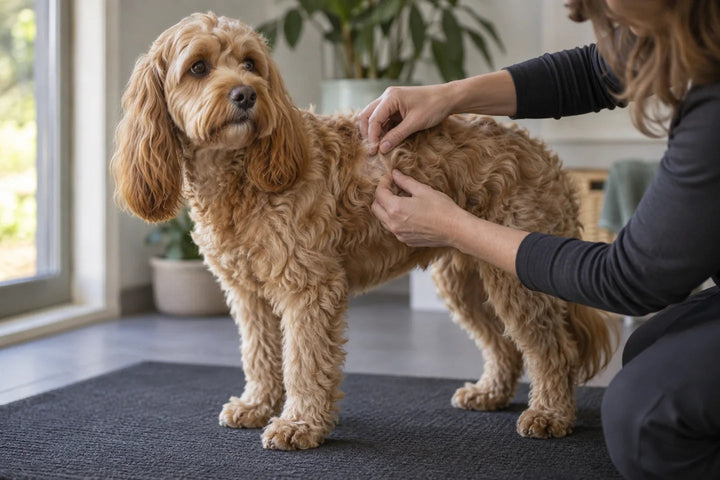
Put cutting tools away before the final check. Comb accessible prepared areas into their natural fall, without pulling. Look at the overall outline and the dog standing comfortably. Do not chase every tiny uneven hair after the dog has had enough.
Note any area you could not safely reach or understand, and leave it for professional help. If you notice pain or an apparent injury, stop and seek appropriate advice. Grooming records should help you recognise a change, not tempt you into treating it yourself.
Clean the tools in the right order
Switch off and disconnect equipment before maintenance, following each tool's instructions. Work on a dry bench away from the dog. Remove loose hair using the recommended method, then follow the correct cleaning, disinfection where required, drying and lubrication instructions for the specific parts.
These are different jobs. Oil does not remove trapped hair, and spraying something on a dirty blade is not a complete cleaning process. Keep electrical bodies dry and do not immerse parts unless the instructions explicitly permit it. Follow product labels for compatibility and contact time; do not combine chemicals or invent a universal soaking recipe.
Our cleaning, disinfection and oiling guide explains the distinctions. Store clean, dry blades and guards so you can identify them easily and avoid damaging the teeth. Keep incompatible systems in separate labelled spaces.
Set a tool aside when it behaves differently
If a blade pulls, catches, looks damaged or performs abnormally after the normal checks, remove it from use. Do not attempt amateur sharpening, tooth alignment or repeated trials on the dog. Use VUNRO support and provide the exact device, attachment and symptoms.
A clear photograph or video of the setup can help. You do not need to repeat an uncomfortable cut to prove a problem. Record what preparation and maintenance checks have already been done so support can give a useful next step.
Keep a short grooming record
After each session, record:
- The job you chose and the body areas completed.
- The exact device, blade and guard or adjustable-head setting used.
- Whether the coat was fully dry and comfortably combable before cutting.
- What your dog accepted easily, where you paused and what needs practical help.
- Tool cleaning completed and the next small maintenance task.
Avoid assigning a fixed replacement date to every blade or copying another dog's grooming interval. Wear, coat condition, use and maintenance vary. Review your own records and the supplied instructions instead.
Choose the next useful job
Perhaps tomorrow's task is checking harness-friction areas, practising paw support or introducing a tool sound at a comfortable distance. Our one small job between grooms guide can help you keep that plan manageable.
The course is complete when you can choose an appropriate task, prepare for it, work within your skills and stop at the right point. You can revisit any lesson as the coat grows or your dog's tolerance changes. A routine that remains comfortable is one you are more likely to maintain.
Evidence and further reading
Follow the instructions supplied with each VUNRO tool for its operation, maintenance and compatible attachments.
Keep learning
More from the Blade Blog
Start Grooming at Home: Your Dog Comes First
Read the guide →
Meet Your VUNRO Tools: Choose the Right Grooming Setup
Read the guide →